Showing posts with label Traveling Angler Tuesdays. Show all posts

01 January 2013

Traveling Angler Tuesday: 10 DIY Tips from Cod

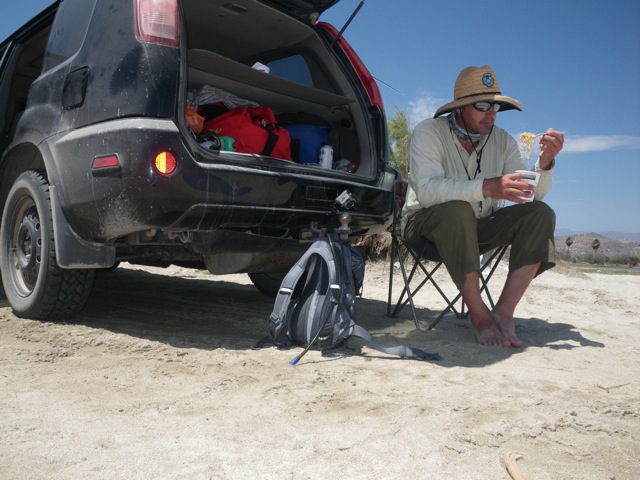
Mista Cod, he of the Chronicles of Cod fame, takes being a Traveling Angler to a whole new level.

Last winter he undertook this epic adventure: 
  • drove from Calgary to Houston, flew to Belize & fished permit; 
  • flew back to Houston and camped on the Gulf Coast to chase reds; 
  • drove from Texas to San Diego and then down the Baja to camp and fish for roosterfish;
  • drove back to Calgary, but stopped along the way to pop over to Cuba for a week-long liveaboard  trip.
Needless to say, when he offers up some advice on fly fishing travel, it might be good to pay attention.

*          *          *

COD'S 10 TIPS FOR DIY FLY FISHING TRIPS 
(not necessarily in order)

10. Use all available resources
Use Google Earth, fly shops, maps, tourist information kiosks - Lonely Planet books are bad ass - every bit of info you collect is good. Sometimes you have to filter through a lot of it to get good stuff but keeping your ear to the ground and at least humour every lead; it can sometimes help you.

9. Observe 
Watch what others are doing. This is a great source of information that's so easy to obtain. If others are catching and you are not, watch what they are doing. It's there for the taking. 

8. Don't beat yourself up 
If the conditions are screwed, if there are no fish around, if you're getting frustrated: take a day off or an afternoon or whatever. If you have time, take a break or a nap. It gives you a chance to mentally recharge. It allows you to add some depth to your trip, learn some new shit, or just generally relax.  

Don't beat yourself up, it's fishing and you are supposed to be enjoying yourself.

7. Follow your gut 
This can save you a lot of grief. Whether it's a road, path, area, or tingling spidey sense, if shit don't seem right...it likely isn't!!  Sometimes you get shit info. If you don't think fish are there, don't like where you are, or just aren't feeling it: make changes! 

I am a firm believer in fishing with confidence; when you do this everything leans a little in your favour.

6. Patience
Super important. "If it was easy, everyone would be doing it." We have all heard this statement before. Achieving hard shit is cool. 

Spin fishing, on a whole, is way more productive than fly fishing; why don't I just huck bait? Not gonna happen. You have taken it upon yourself to "DO IT YOURSELF." Expect a learning curve and be patient. Don't focus on what you're not doing, rather make note of the things you are learning and getting better at.

5. Network 
Hang out in fly shops, at boat launches and places where fisherman congregate. Talk to people, tell them what you're there doing. You'd be surprised of the number of people you can meet and the great info you can find out just by chatting with other fishermen.

4. Know your enemy
Going into the unknown is an often daunting task. If it's a new fish you're targeting, try to get some background info on them; e.g., flies, tides, diet, size or techniques. 

Bring tying material if possible; sometimes you show up with the wrong stuff. It's nice to have the option of spinning up some new bugs. It's a good confidence builder and it adds depth to your trip.

3. Set realistic goals 
The chances of you showing up and shit-canning the fish that you're after are slim to none. Set realistic goals ("I hope I get an eat" or "I hope I can catch a decent one.") 

Don't be disappointed if you don't achieve your goals. Look for the positive: maybe you thought your vision got a bit better or you figured out something that made you cast a little better in the wind. 

If you've never been there or done it before, what makes you think you're gonna whack 'em??

2. Be flexible
When you do things on your own, you need to be a little more flexible than on a guided trip. Expect to fish less, explore more, have more down time, make mistakes, and fumble the ball more generally speaking.  

You might have a few wild goose chases, expect them. That's all part of DIY fishing: embrace it. Thats what makes it awesome and rewarding. You figured it out. Not your guide. Not your local buddy. It's then truly your fish.

1. Time or money
Many people have one of these. Very few have both. Make an honest decision which one you have.

If you only have a few days, or a week, then maybe a guided trip makes more sense. 

If you've got no dough but spare time, do it on the cheap: go longer and expect your pitfalls due to inexperience. 

I justify extended trips by telling myself, "It cost so much to get here, I might as well stay longer." I prefer to have time on my side as opposed to money when it comes to DIY. 

For example, weather can shut you down. If you go on the week with crap weather, your fishing will likely be the shits. If you're there for three weeks instead, you'll likely encounter good conditions at some point. 

Sometimes shit just takes awhile to figure out, too.

*          *          *

Thanks for taking the time to write this up, AC! 

Be sure to follow Cod's next adventure over at Chronicles of Cod

He can be hit up via Twitter at @chroniclesofcod

*          *          *

Traveling Angler Tuesdays launched June 26th, 2012 on mattrevors.com. My mission is to prove the concept of fly fishing travel abroad is not just the realm of old rich dudes and magazine writers & photographers. Keep checking back regularly as I share tips & tricks to get you to fly fishing locales you dream of going to. To see past articles & tips from the Traveling Angler Tuesdays series, click here.

23 October 2012

Traveling Angler Tuesdays: Global Rescue

When one travels off the beaten path in pursuit of fish or other adventures (or for work), it's always good to plan ahead about how you're getting home in the worse case scenario.

Since my first trip to West Africa in 2010, my plan has involved forking some cash over to become a member of Global Rescue.

With different membership plans and options available, Global Rescue provides emergency response services in case of medical or security risks to their members.

Because of the nature of my travel, I have both the medical and security plans that cover me for up to 90 days out of my home province at a time (I added the security package once I found out the location of my next assignment). 

It works out to be about $55/month for this coverage. I consider it an extremely good investment.

Note: The company I'm (loosely) attached to has a contract with International SOS, which I have access to, but I pay extra for Global Rescue out of my own pocket. That says something right there, huh?

Coincidently (and conveniently), an email update from Angling Trade arrived while I was writing the draft of this today, with a little blurb about Global Rescue. It involves an experience Jim Klug of Yellow Dog Fly Fishing Adventures had on one of his many travels, resulting in Global Rescue getting a call. You can read about it here.

You can also read more about Global rescue in this article from Outside Magazine here.

Oh, if I'm not cool enough to review & recommend Global Rescue, these guys might be sufficiently cooler.

*          *          *

Traveling Angler Tuesdays launched June 26th, 2012 on mattrevors.com. My mission is to prove the concept of fly fishing travel abroad is not just the realm of old rich dudes and magazine writers & photographers. Keep checking back regularly as I share tips & tricks to get you to fly fishing locales you dream of going to. To see past articles & tips, click here.

16 October 2012

Traveling Angler Tuesdays: The Charleston Five

My lovely girlfriend and I went on an epic road trip a few months back and we ended up in lovely, historic Charleston, SC for five days.

We really loved it: the food, hospitality and fun were all in abundance.

There's something special about historical port cities and towns. They give me a good feeling. Halifax, St. John's (Newfoundland), Seattle, Montreal, Portland (Maine), Vancouver, Belfast (Maine) and Charleston have each given me that vibe over the years. I can't put my finger on it, but part of it is definitely the architecture. Or maybe the fresh sea air. Who knows? I like it though.

Note: Sorry Saint John (New Brunswick), Sydney (Nova Scotia), but you're a little ways off from making this list. Keep chasing that rainbow, though!

Here's my list of five must-sees/dos if you're heading to the Holy City for a visit (plus a bonus tip for affordable accommodations right in the heart of Charleston):

1. South Carolina Aquarium
There's a reason I put this at number one: the SC Aquarium is AWESOME! Snakes, albino alligators, sharks, a big-ass eagle, lots of fish, lots of things to see. Expect to spend a couple of hours wandering around to see everything, but allocate more time if you plan to take in a show at the 4-D Theatre.

Bonus: if you happen to get skunked fishing for redfish, like I did, at least you can see them up close at the Aquarium. Just don't expect to be allowed to grab one for a grip & grin...

Web: scaquarium.org
Location: 100 Aquarium Wharf  Charleston, SC (map)

No hero shots allowed!
2. Sullivan's Island
There's a beach. And there's Fort Moultrie, an old-timey fort in service for over 170 years. Fort Moutrie was manned through many major incidents of modern history, including the Revolutionary War, the 'War of Northern Aggression' and up through World War II.
Sullivan's Island beach. Not Fort Moultrie.
And Sullivan's is also home to Poe's Tavern (more on that below), too.

There's also kite-surfing lessons, which is awesome if you like watching people slam face-first into water and/or sand at high velocities. I know I did.

Location: map

3. Lowcountry Fly Shop
Scotty D and the gang at Lowcountry Fly Shop have an awesome shop & know their shit. Everything you could ask for, for both fresh & saltwater, is at the shop. Loads of tying materials, too.

Lowcountry also runs a guide and charter service. Scotty's a workhorse on the poling platform. He put me into lots of fish, too (I just messed things up a lot). Getting to see a part of the Charleston region from the bow of Scotty's flats boat was a definite highlight of my trip.

Note: Fishing in Charleston? Work on casting short-shots. Seriously. Fifteen to thirty feet. That means five to twenty feet of fly line out of the tip. Choose your rod wisely. I'm already mentally preparing for my return trip. And yes, Charleston reds do seem to be smarter than Louisiana reds...

Pop in for a visit, buy some flies, book a guided trip, ask where to eat/drink...ask if Scotty still has my sneakers...you can do it all at Lowcountry Fly Shop. A mandatory stop for the Traveling Angler whilst in Charleston.

Web: lowcountryflyshop.com
Location: 280 W. Coleman Blvd, Mount Pleasant, SC (map)

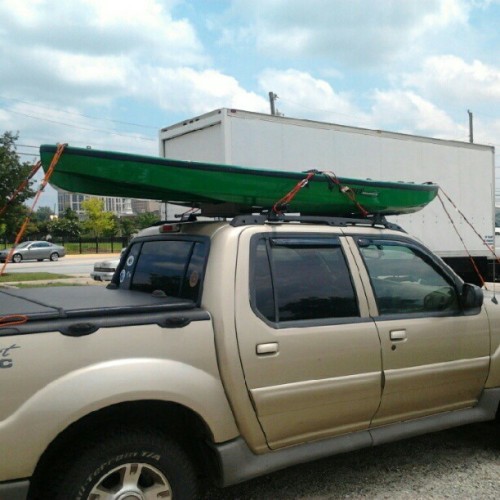
Big-ass bridge. Scary with a kayak strapped to your roof rack. But Lowcountry Fly Shop is over there...
4. Hominy Grill
I'm not a souvenir guy, but I keep this on my fridge.
That must say something right there.
This was conveniently located around the corner from where we stayed. We ate there twice. We had plans to go again. It was that awesome.

A trip to the South isn't right without eating Southern food. It's truly the food of the angels. Perhaps big-boned angels, but angels nonetheless.

The first meal we had at the Hominy Grill was the big nasty biscuit with fried chicken breast, cheddar cheese and sausage gravy. With grits, cornbread and sweet tea.

If one was to eat Southern-style, it's full-ass or no-ass. And eating that leads down the path to full-ass after a while, I'm certain. It was delicious. My mouth is watering right now.

The second time in, we had breakfast. I was considering the big nasty again (yes, it's on the breakfast menu, too) but opted for the egg biscuit. Something about biscuits in that part of the world really makes sense. With grits on the side, once again.

I like grits. And sweet tea.

Damn it I'm hungry.

Note: I started making grits here. It took a small but coordinated search to find authentic grits in Atlantic Canada, but I did it. That's what I do. I find stuff. I'm good at it, and often receive a substantial sum of money to find stuff. Interested in me finding stuff for you? Hire me. Seriously.

I regret not making the third trip as we were planning to buy the Hominy Grill Recipe Book when we went back...but I just noticed they have recipes on their webpage. Win.

Web: hominygrill.com
Location: 207 Rutledge Avenue, Charleston, SC (map)

5. Poe's Tavern
Located on Sullivan's Island, Poe's Tavern has the best damn fries and burgers we had on our road trip. Bar none. Just go. You won't regret it.

Note: Special thanks to Cameron over at TFM for recommending Poe's Tavern as well as the SC Aquarium for our adventures!

Web: poestavern.com/sullivans-island/
Location: 2210 Middle Street, Sullivan's Island, SC (map)

6. Affordable Accommodations in Historic Charleston (BONUS)
This is your money-saving tip for this post. And a call for people to think about prioritizing when you're on vacation.

Here's an exercise: Go to Expedia and search for hotels in "Historic Charleston."

Spendy, right?

Enter Not-so-Hostel, located walking distance to everything in "Historic Charleston." A private room, shared bathroom and next to the old-timey Southern veranda for sippin' mint juleps. That was mid-summer, I might add.

Note: Hostels, in the eyes of North Americans, get a bad rap, mostly due to the inconsiderate dirtbag hippies. Some people don't like shared bathrooms, either. I say get over yourself. Use the bathroom and get outside to see stuff. And it's funny that many of the same people that bitch & moan about staying in a hostel will also bitch & moan about the high price of a hotel room. Figure your shit out, people.

And I'm not saying all hippies are inconsiderate or dirtbags. I'm saying the inconsiderate dirtbag kind of hippies really ruin a lot of shit (especially if you're in a band and you steal booze from the people who promoted your show...you f**kers know who you are). The extremely condescending "yippies" (hippy + yuppy), typically found wearing Patagonia clothing and driving Subaru Outbacks* are annoying, too, but at least they don't ruin shit like the inconsiderate dirtbag hippy does.

* - I'm considering buying a Subaru Outback, but it's due to mileage/storage/reliability combination. Seriously. How's that for irony? No plans for a Patagonia soft-shell anytime soon, though. But Patagonia does make apparel of excellent quality. Just sayin'.

My girlfriend and I were trying to keep our accommodation costs on this road trip as low as possible. We were aiming for a budgeted cost of $50 per night. We did a few overnight drives ($0/night, except extra coffee/Red Bull), a few nights in campgrounds ($20-$40/night), a few hotels ($109-$145/night) and four nights at the Not-So Hostel in Charleston...at $60/night.

That's not a typo: we spent five days/four nights in Historic Charleston for $240 total, cheaper than many hotels charge per night in the summertime in Chucktown.

A side-benefit of staying at the hostel was being within walking distance of lots of restaurants and activities, so no burning gas while we were there, either.

Wandering around Charleston, eating delicious Southern food, going fishing with Scotty D. seeing the SC Aquarium and the other fun we had wouldn't have been possible if I didn't happen to come across the Not-So Hostel's website. We wouldn't have been able to spend five days in the Holy City at regular hotel rates. The rates are too damn high.

Web: notsohostel.com
Location: 156 Spring Street, Charleston, SC (map)

Fancy hotels are nice, but if it came down to sleeping in a king-size bed or seeing Becky hold a baby alligator...

*          *          *

Traveling Angler Tuesdays launched June 26th, 2012 on mattrevors.com. My mission is to prove the concept of fly fishing travel abroad is not just the realm of old rich dudes and magazine writers & photographers. Keep checking back regularly as I share tips & tricks to get you to fly fishing locales you dream of going to. To see past articles & tips, click here.

25 September 2012

Traveling Angler Tuesdays: Seven Sins of Air Travel

A more civilized form of air travel.
In the spirit of 'do onto others' and knowledge-sharing, I give you seven sins of air travel that drive me absolutely bonkers while I'm traveling in tightly-packed tin pigeons.

I don't do these things. Neither should you.

1. Not waiting for row number or section to board.
The mad rush occurring at the gate when the gate agent calls for general boarding is an affront to civilized society.

There is a method to the airline's madness when they ask for rows 21-27 to board. When people in row 17 try to board during this time, it messes up the method.

Wait your turn. The plane will not leave without you.

2. Not waiting your turn to exit.
This comic from The Oatmeal sums it up perfectly.

Click the image or here to view The Oatmeal's original post.
Note: I'm not intending to steal this content from The OatmealThe Oatmeal is funny as shit & should be read regularly. I'm hoping my numerous links back to The Oatmeal will absolve any ill-feelings someone might have for my borrowing this. I am but a moronic hack in comparison to the comic genius of The Oatmeal. Read The Oatmeal. All the time. Pre-order the book or buy some artwork or a shirt from The Oatmeal while you're at it. For more awesomeness from The Oatmeal on air travel, click here.

3. It's a touch screen, damn it!
That little entertainment system on the back of the seat in front of you? It's a touch screen.

It's not a "poke screen" or a "push with all your might screen" or a "two finger death jab screen."

Touch screen. As in, lightly place your finger on the selection you wish to make. Leave it there for a second, then remove your finger. That's it.

People are less likely to be beaten with a rolled-up issue of the complimentary in-flight magazine (or Financial Post) if they would adhere to this PSA.

4. Body odour or excessive perfume/cologne.
It should go without saying: people need to have some consideration for the other dozens of people cramped into an aluminum tube.

Don't be smelly.

5. Obnoxious overconsumption of alcohol.
I frequently travel to depressing and isolated places for work, leaving my lovely girlfriend and adorable dog behind for weeks at a time. Or I travel to fun places to fish or for vacation.

If anyone had an excuse to either drown their sorrows or celebrate with alcohol during air travel, it'd be me. But I don't. I drink ginger ale. And coffee. Lots of coffee.

If you need multiple drinks to deal with air travel, you probably feel you need multiple drinks to deal with other things in life. That means you are an alcoholic and require assistance. Visit AA.

Note: to my fellow Atlantic Canadians: YOU are the most frequent people I see being obnoxiously drunk in airports or on planes in my travels. Is Fort Mac not all it's cracked up to be? Straighten your shit out. It's embarrassing.

6. Carrying on way too much shit.
This is extremely inconsiderate to other passengers, and sadly airlines do little to enforce their rules on this.

People need to either pack less or get off their wallets and spend the extra $25 to check a bag.

Stop the madness.

7. Using other seats as pull-up bars or handrails.
This, too, should be fairly self-evident, but it's really not.

People are inconsiderate tools sometimes.

I'll share a story.

Note: Feel free to skip this story if you like. Especially if you don't wish to have your opinion of me changed.

Once upon a time, in a time long ago, I was flying from Montreal to Vancouver.

This flight is pretty much the longest non-stop flight we have in Canada, at about five hours or more.

Picture me sitting in a window seat in economy class, beside two middle-aged ladies from Quebec. Leopard-pattern pants, a zebra-print dress & leather jackets betrayed their cougarness. They scared me a little.

Shortly after the plane took off I put on my noise-cancelling headphones, lowered my hat, and dozed off.

Moments later, I awoke feeling as though a was in a deathly free-fall.

No, the plane wasn't crashing. It was a morbidly-obese man seated behind me, pulling himself up with my seat. Have you ever had a feeling of falling to your death while on the cusp of sleep? It sucks.

As Fatty moved toward the aisle, he grabbed Cougar #1's seat, and a handful of her hair, too. Same for Cougar #2's seat, but she did a preemptive duck to avoid having her hair pulled.

Note: insert your own 'cougars having their hair pulled' joke here, if you like.

The sad thing is, I allowed it to happen again more than once. Fatty was in violation of Pet Peeve #5: he was drinking a few beer but had the bladder of a small girl. Every time he stood up, he grabbed my seat to pull himself up.

Knowing sleep would be unattainable until this situation became remedied, I prepared myself for Fatty's return from his third trip to the lavatory. I requested a Globe and Mail from the flight attendant but received a National Post. I removed the Financial Post section and rolled it up tightly. I folded the tightly-rolled Financial Post in half. I waited.

I had an assumption and a quick glance over my shoulder proved that assumption correct: Fatty was grabbing everyone's seats along the aisle to steady himself as he waddled along. A flight attendant was several rows behind him, collecting empty cups. My timing would have to be perfect.

Clutching the rolled-up Financial Post, I faced forward in my seat but kept Fatty in my peripheral vision. The other passengers in the row behind us got up so he could enter. Fatty grabbed Cougar #2's seat and slid into the row. He pulled himself along the row using Cougar #1's seat. The cougars exchanged a look of displeasure.

Fatty was reaching for my seat when I turned. The flight attendant was four rows back and distracted with a passenger. Perfect.

The split-second Fatty's hand touched my seat to lower himself, I half-spun and rapped his knuckles with the rolled-up Financial Post. Fatty let go and fell backward into his seat with a look of surprise. The flight attendant was three rows back and approaching. She didn't see my clout in the name of justice and humanity.

I dropped the Financial Post in front of my seat to hide it and said firmly, "You have to stop grabbing my fucking seat."

Before he could respond, the flight attended was on the scene. "Is everything ok here?"

"It would be if this gentleman would stop grabbing my seat to pull himself up when he goes to the bathroom every twenty minutes," I calmly replied.

Poor Fatty looked confused as the flight attendant addressed him. "Sir," she said, "please refrain from grabbing the seats of other passengers."

He mumbled an acknowledgement, staring daggers at me. I smirked at him and turned back around. I replaced my noise-cancelling headphones and lowered my hat. The cougars giggled at what just transpired. I dozed until the plane landed in Vancouver.

As I stood to exit the plane, I glanced at Fatty. He had the look of death warmed over; he spent the remainder of the flight coming off of his beer buzz. Perfect.

*          *          *

Did I miss anything? What annoys the shit out of you during air travel? Was I too mean to Fatty?

Hit it up in the comments section.

*          *          *

Traveling Angler Tuesdays launched June 26th, 2012 on mattrevors.com. My mission is to prove the concept of fly fishing travel abroad is not just the realm of old rich dudes and magazine writers & photographers. Keep checking back regularly as I share tips & tricks to get you to fly fishing locales you dream of going to. To see past articles & tips, click here.

21 August 2012

Traveling Angler Tuesday: My Must-Haves


Clousers & Deceivers are must-haves
In last week's Traveling Angler Tuesday post, I listed a few of my must-haves for traveling. I decided to take those items and other traveling necessities and compile them into a couple of lists.

I've spilt my must-haves into 'general apparel & accessories' and 'fishing-specific' sublists; this week I'll cover my general category. Fishing-specific items will be covered in a future post...like, next week.

Without further ado, here are my General Apparel and Accessories must-haves for traveling...
(Note: Links to the products will be provided where possible)
Tools of the trade
  • iPod Touch (64gb): it does everything an iPhone does (except make/receive calls & texts) with more memory and for less money. I've been traveling with this iPod for almost two years; it's been my camera, atlas, e-reader, music & movie player, video camera, and communications hub. Add a pair of travel-friendly noise-cancelling earbud headphones and you have it made for flights and noisy neighbourhoods (or snoring roommates). It's a full-on mobile command post.
  • MSR Packtowel: almost the size of a beach towel, folds to the size of a small paperback novel. It's very quick-drying and an amazing product. I have two of them in different sizes.
  • Ex Officio Give-N-Go boxer brief: comfortable, easy to wash, quick drying. Wear a pair, take a pair. Wash them in the shower or sink when needed and they'll be dry within hours. Some day, every pair of underwear I own will be these.
  • Smartwool socks: awesome products, and oh so comfortable. I have several pairs of varying weights and it's not often I'll wear anything else. Great to have a pair stashed away even in tropical climates for blister prevention.
  • Decent hat. Blocks the sun. Cuts glare on the water. Hides unwashed bed-head. I prefer the mesh-back trucker style as it's a little cooler in warm climates. My current hat is the previous version of this one (gotta support my Southern cousins...)
  • Reliable but inexpensive (or inexpensive-looking) watch. You might need to know the time, and hauling out your iPod Touch to check the time in downtown Puerto San Jose or Ouagadougou might not be the wisest choice.
  • Pocket tool. This might not be practical if you're not checking any luggage. I'm almost always check luggage, so I bring two: a Gerber Crucial and a Leatherman Wave. If I were to pick only one, the Gerber would make the trip.
  • Water bottle. I use Kleen Kanteen, but without the spout (even with water bottles: the more moving parts it has, more likely it will break).
  • Packable rain jacket. Buy one of decent quality and it will last for years. I've had one from Marmot for seven years and a full rain suit from MEC for five years; they're both going strong.
  • Notebook & pen/pencil. This is a backup in case the iPod battery is dead or dying (or because the traveler is in downtown Puerto San Jose & doesn't want to take their iPod out of their pocket). Jot down directions, contact information, fly patterns to tie or buy, to-do lists, whatever. Just have one.
  • Zip-Lock freezer bags (large). Use them to isolate toiletries to keep them from spilling into your luggage. Or to isolate stinky socks & underwear when packing. Transport several pounds of primo Guatemalan coffee beans in them. They're good to have.
  • Electrical tape. To tape things shut, like shampoo bottles or bandages to open wounds. Or tape things together, like a tube for a 3-piece glass rod to a case for 4-piece rods, so you only have 'one' carry-on item.
  • Gum. Minty stuff to freshen your breath. The Traveling Angler might not have a chance to brush their teeth for a little while.
  • A good playlist...or three. Have a playlist for chilling out or falling asleep to on noisy planes, buses, in dorms or whatever. Have another one for fun times, with shitty music you might not normally listen to, because you never know when you'll be called upon to supply the party music (Jay-Z albums are pretty good for this). And have another one of your favourite tracks or genre to sing along to that allows you to do whatever you need to do. Like drive for 26 hours straight. This is a good track for that right here:

Traveling Angler Tuesdays launched June 26th, 2012 on mattrevors.com. My mission is to prove the concept of fly fishing travel abroad is not just the realm of old rich dudes and magazine writers & photographers. Keep checking back regularly as I share tips & tricks to get you to fly fishing locales you dream of going to. To see past articles & tips, click here.

Disclaimer
The products mentioned in this article were bought and paid for by the author, Mat Trevors. 

I, Mat Trevors, am not sponsored by or associated with any of the companies listed above and am accepting no compensation, monetary or otherwise, in exchange for these endorsements. 

My independent status may change in the future but, as of the date of publication, no relationship has been pursued or established. 

Companies wishing to hire a Writer-Not-In-Residence-But-On-Water can definitely buy my allegiance; however, those companies must be upstanding members of the global community and produce gear of high quality. I can be reached through the Contact Page.


Enter your email address to subscribe (I will never, ever spam, sell or trade your email address):

14 August 2012

Traveling Angler Tuesdays: Packing Tips

Traveling Angler Tuesdays launched June 26th, 2012 on mattrevors.com. My mission is to prove the concept of fly fishing travel abroad is not just the realm of old rich dudes and magazine writers & photographers. Keep checking back regularly as I share tips & tricks to get you to fly fishing locales you dream of going to. To see past articles & tips, click here.

Guatemalan chicken bus & fly fishing sculpture at Calgary Airport
Dump all of your money and everything you've packed on your bed. Look at it. Then pack half the clothes and take double the money. - Unknown

A few weeks back I discussed how you should carry your rod and reel on the plane with you.

This week I'm going to skip over the fun stuff of rods, reels, flies and such, and get to the boring stuff: clothes, toiletries and other necessities.

Here are five tips outlining my basic methodology:

1. Weather and climate
Unless you've been to the area before, click over to the Weather Underground or some other weather website to get an idea of the average highs & lows.

To view weather history on WU, click  on the tab for Today's Almanac, then click "View more history data" on the bottom right of that square:


After checking the average highs & lows for the month of travel, look at the extended forecast to see if anything weird is on the horizon.

Armed with this knowledge, the Traveling Angler can start picking out some clothing to pack for the journey.

Remember this: weather determines whether you put on shorts or long-johns in the morning. Climate determines how many of each you own. Same goes for packing and traveling: know what to expect.

2. Planned activities
Go through your itinerary to see what's scheduled. A fancy dinner, perhaps? Clubbing? Camping on the beach for five days straight? It matters not whether the Traveling Angler is male or female: different activities call for different clothes.

If traveling to an all-inclusive fishing lodge or doing a week-long DIY camping trip in warm locations, packing light should be an easy task; shorts, a few shirts, quick-dry pants, flats boots, flip flops and you're set.

If a colder venue is on tap (steelheading in January on Haida Gwaii, anyone?), heavier clothes and waders will obviously be needed, but one can still pack light on the number of clothes one brings.

Throw a nice dinner or a night out with your significant other and packing light becomes slightly more complicated. Your loved one probably wouldn't appreciate sitting across a candle-lit dinner, looking at (and smelling) your fish-slimed shirt.

Any way you cut it, you want to have the appropriate attire for the activities planned.

You don't, for instance, want to be the knob wearing boardshorts and flipflops in a dress-code-enforced casino in San Juan, PR  getting escorted out by security after winning three consecutive hands in blackjack. Hypothetically speaking, of course...

Fortunately for the Traveling Angler, several clothing & fishing companies are getting good at making quick-dry technical apparel that looks sharp enough to do double-duty on the water or on the town. If you have extra cash to burn, or don't mind skipping a rent/mortgage payment, check out the following companies:
Don't dismiss convertible pants, either. Life's an adventure, not a fashion show. Convertible pants are practical and comfortable. Seriously.

They just make you look like a complete dork when you wear them in your hometown.

3. Trimming it down
The Traveling Angler has their pile of clothes on the bed. Now it's time to get realistic. Ask yourself the following:
  • Are you really going to work out and/or do yoga every day you're there? Do you really need exercise-specific clothing, or can you do those activities in boardshorts or swimsuit? Same goes for running shoes. Running barefoot on the beach is good for your feet and your soul. Do you need the extra weight & space of single-purpose shoes?
  • Are there laundry facilities available? Are you mentally capable of washing a few clothes in the bathroom sink? Those technical clothes are made of quick-drying material for a reason. They can dry overnight.
  • Is it the rainy season? No? Then why are you bringing a full rain suit?
If you are really having a hard time choosing, go back to the quote above: pack half the clothes and take double the money. 

4. The uber-secret packing method of ancient gods
Leaving space pays off
Whether I'm traveling for work for four weeks, or traveling for fishing for one week, I use the following technique for packing my clothes.

If traveling for work, this allows me to get work boots, books, fishing gear & tying materials in my larger duffel bag. 

If I'm heading somewhere to fish, this allows me to use a small duffel bag or a backpack as my checked bag, usually with room to spare for whatever knick-knacks & other extras I pick up on my journey (4lbs of Guatemalan coffee, for instance).

So here's how it's done:
  • Take the largest/heaviest long-sleeved piece of clothing and lay it flat on the bed or floor. If packing a hoodie or hooded jacket, use this.
  • Lay any other long-sleeved articles of clothing directly on top of the first, matching up the sleeves, neck & bottom. Make sure they're flat.
  • Do the same for any t-shirts & short-sleeved shirts.
  • Place underwear, socks, lightweight shorts, pants on top of the stack of shirts, in the centre, and ball them into a tight pile.
  • Take the hood of the first piece of clothing on the bottom and pull it tightly over the pile in the centre.
  • Grab a bottom corner of the clothes & pull it over the pile in the centre. Do the same with the other bottom corner.
  • Take ahold of one of the stacks of shirt sleeves and wrap it around the ball of clothes, using it to 'tie down' on of the bottom corners. Do the same with the other stack of sleeves.
  • Flip the ball of clothes over, so its weight keeps the sleeves from loosening.
You should have a ball of clothes, neatly and tightly packed to approximately the size of a soccer ball. Maybe even a football, if you're good at packing light. Place this in your backpack or duffel bag.

Note: this method keeps shirts from getting wrinkled to shit; typically just the sleeves end up wrinkled.

Any heavier pairs of pants or shorts, or a towel* if required, can be folded and/or rolled and placed in the spaces under the edges of the clothing ball.

* - Buy a travel/pack towel. Trust me. See the list at the end of the post for a good one.

5. Toiletries
Depending on the location of your adventure, the toiletries needed can vary. On a family vacation with a side trip of fishing, the Traveling Angler might need the full spectrum of a shaving kit, makeup and other niceties. On a two-night backcountry camping/fishing trip, an general all-purpose camp soap might be sufficient.

Note: I highly recommend having some biodegradable camp soap wherever your travels might take you. The right brand can serve as a laundry detergent, body wash or dish detergent. Ensure it is biodegradable, though, especially if you're using it in a body of water that isn't a bathtub. Millions of microscopic organisms will thank you.

Lots of companies make travel or trial-size containers of shaving cream, shampoo, body wash, toothpaste and mouthwash, and there are two schools of thought on how to obtain them:
  1. The Suburban School: go to your local Walgreens, Shopper's Drug Mart, or Sprawl-Mart, look for the beauty and hygiene section. There should be everything you need there for very reasonable prices.
  2. The Pirate School: when staying at a hotel, take the shampoo, soap, sewing kits, mouthwash and whatever else is stocked in the room's bathroom. Then plunder the housekeeper's cart for more when she is in an adjacent room with her back turned. Bam, you now have travel-size toiletries for the next four months.
Note: I always travel with a few ziplock bags to isolate toiletries that may leak in transit. I also have a roll of electrical tape packed away; a quick wrap of tape over the pop-top of shampoo keeps things in check.

Always remember to pack only what you need. And, if you happen to forget something, it'll be rare that you won't be able to get something on your journey*.

* - Unless you're running out of deodorant in an isolated project site in Nunavut. Like I am...

*         *          *

This might seem over-simplified, and I'll be the first to admit, it is. It takes me longer to figure out what to pack than it does for me to write these posts (it takes a little while to write these).

Packing & traveling light isn't a macho thing, nor is it something to really brag about. And forgetting to pack (or intentionally leaving behind) necessary things won't make you any friends if your constantly bumming toothpaste (or underwear).

However, packing exactly what you need and nothing more make things less complicated and far more comfortable when you are traveling.

*          *          *

Here are a few pieces of gear and clothing I count on when I travel, for work and for play (read: fish):
  • MEC Fast-Track 2 rolling duffel: my go-to for month-long project work. It fits work clothes & boots, books, toiletries, fishing and/or fly tying gear.
  • Arc'Teryx Needle 55L backpack: this pack is discontinued. I bought it in '05 for a steal on ebay. Arc'teryx makes very spendy stuff, but it's extremely good quality. This is the backpack pictured above. I still use a softshell jacket and a winter jacket of theirs that are both pushing seven years old. 
  • MSR Packtowel: almost the size of a beach towel, folds to the size of a small paperback novel. I don't leave home without it. Amazing product.
  • Ex Officio Give-N-Go boxer brief: another go-to. Comfortable, easy to wash, quick drying. Wear a pair, take a pair. Wash them in the shower or sink when needed and they'll be dry within hours. Some day, every pair of underwear I own will be these.
  • Smartwool socks: same as the Ex Officio underwear: awesome product, and oh so comfortable. I have several pairs of varying weights and it's not often I'll wear anything else. To those who have gave me socks or gift cards I have used on Smartwool socks: thank you.
*          *          *

Disclaimer

The products mentioned in this article were bought and paid for by the author, Mat Trevors. 

I, Mat Trevors, am not sponsored by or associated with any of the companies listed above and am accepting no compensation, monetary or otherwise, in exchange for these endorsements. 

My independent status may change in the future but, as of the date of publication, no relationship has been pursued or established. 

Companies wishing to hire a Writer-Not-In-Residence-But-On-Water can definitely buy my allegiance; however, those companies must be upstanding members of the global community and produce gear of high quality. I can be reached through the Contact Page.


Enter your email address to subscribe (I will never, ever spam, sell or trade your email address):

07 August 2012

Traveling Angler Tuesdays: Gear Review - Redington Sonic-Pro Wading Pants

Traveling Angler Tuesdays launched June 26th, 2012 on mattrevors.com. My mission is to prove the concept of fly fishing travel abroad is not just the realm of old rich dudes and magazine writers & photographers. Keep checking back regularly as I share tips & tricks to get you to fly fishing locales you dream of going to. To see past articles & tips, click here.

This is the first Traveling Angler Tuesday gear review.


For any self-respecting Traveling Angler, packing and traveling light should be a major part of the process.

Of course, anglers with their rod tips pointed south have it made: quick-dry pants & shirt, hat, sunglasses, Buff and suitable flats boots. That, in a nutshell, is it.

Anglers traveling to points north (well, typically northwest and maybe northeast) might have to bring some waders along. Waders are bulky and add weight to your luggage, but water temperatures and general climate patterns in some destinations may require them. Hypothermia isn't all that fun, and can definitely occur in year-round.

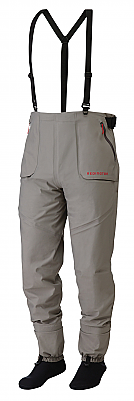
There exists a wader that packs nicely without taking up too much space and without adding too much dreaded weight to your luggage: Redington's Sonic-Pro Wading Pant.

Waist-high and lightweight, the wading pants use Redington's sonic construction to weld the seams together, resulting in no stitching along the seams. No stitching means no holes. No holes means a better chance of no leaks. These are good things.

I have been using (and traveling with) the Sonic-Pro Wading Pant for the past few months; my review is as follows:

Note: I also have a pair of Redington's Sonic-Pro Zip-Front chest waders, which I have been using (& abusing) for the past two seasons without any issues whatsoever. For comparison with the Sonic-Pro Wading Pants, I have added some notes about the Zip-Fronts as well.

Fit - 3.5 / 5
I am wearing the wading pants in a size large. For the record, I find it difficult to find clothes, fishing-related or not, that fit me well; I am 5'8" and 195lbs, with a 34" (sometimes 36") waist and take a size 9 shoe. I always seem to be on the cusp between medium and large for most clothing. Waders included.

The wading pants fit me comfortably, and their adjustable waist strap & suspenders do what they're supposed to do. The large size would definitely fit a taller man than I, and the neoprene wading booties could easily fit a person with size 11 feet. I wear two pairs of socks when wading (I'm susceptible to cold in the feet due to a minor experience with frostbite) so the roominess of the booties works out well for me.

If I was 5'10" or so, the wading pants would definitely be getting a 4.5 out of 5. In fairness, the same issue came up trying on Patagonia and Simms waders prior to purchasing the Zip-Front chest waders. I'm just an odd-shaped fellow. It's a rugby thing, I'm sure.

Zip-Fronts: Same deal; size large. Definitely made for someone a little taller than me, but they fit comfortably. Neoprene wading booties are also a little big, but a non-issue due to my wearing two pairs of socks.

Mobility - 4.5 / 5
When walking to and from the river, I hardly notice the Sonic-Pro Wading Pant. They feel as light as some of the technical rain pants one can buy at REI or MEC.

For bending over to put on my wading boots, I do have to keep the adjustable waist strap loose until my boots are done up.

There are no issues with kneeling, squatting, climbing over things, etc., while wearing the wading pants.

Zip-Fronts: I have to keep the waders unzipped and the wading belt undone while putting on my wading boots in the zip-fronts, but I've haven't any mobility issues with them, either. However, you definitely notice you're wearing waders when you have them on; though lightweight, they're still chest waders.

Style - wtf? / 5
Who gives a flying rat's ass about style? It's fishing, damn it. If you're worried about style, the figure skating club is probably looking for new members.

Zip-Fronts: Ditto. But they definitely make me feel like a pro. Except when my casting falls apart five hours into a tough day of fishing. Then I feel like a chump in nice waders.

Packability - 5 / 5
This is where Redington's Sonic-Pro Wading Pant shines. These things pack up smaller than your typical hoodie or bath towel, taking up hardly any space at all in my duffel bag. These things are damn-near perfect for traveling.

In fact, do you think this review would make it as a Traveling Angler Tuesday post if I didn't think the wading pants were worthy? Damn straight.

Zip-Fronts: Due to being chest waders and of heavier construction, the zip-fronts take up 2-3 times more space and I'd say weigh about twice as much as the wading pants (estimated). I have, however, taken the zip-fronts on a few trips, without any regrets. They pack smaller than boot-foot waders, after all.

Durability - 3.5 / 5
To be clear: I have had zero issues with the wading pants with regards to durability. The work like they're supposed to: they keep me dry.

That being said, I wouldn't want to take them bushwhacking through a heavy alders or thorn bushes for any great distance. The thought of sliding down a riverbank in them caused me to walk the extra hundred or so yards to a gentler slope down to the water.

Bushwhacking through alders & thorn bushes and sliding down riverbanks, however, is not what they're designed for; used within their limitations and with a little bit of care, the Sonic-Pro Wading Pant should last the angler a very long time. They are extremely well-made.

And they handled an errant size 6 Clouser minnow fairly well. No worse for wear it seems.

Zip-Fronts: Bulletproof. I feel like Iron Man in them, that's how heavy-duty they seem (without sacrificing the lightness & breathability of modern waders). If I was to give the zip-fronts a score out of 5 for durability, it'd be 5.5. Seriously.

*          *          *

So, needless to say, I'm a pretty big fan of the wading pants from Redington (and the Sonic-Pro Zip-Front waders, too).

Are wading pants for everybody?

Definitely not.

But if you're a small-stream fisherman, fishing from a boat or canoe, fishing cold spring creeks on warm days, or a Traveling Angler, I think you could put the Sonic-Pro Wading Pant to pretty good use. I know I have.

*          *          *

Product Information:
Redington Sonic-Pro Wading Pants
MSRP:
$229.95
Colour:
Driftwood
Manufacturer's Description:
Ideal waders to fish in when the weather is warm, but the water is still cold or between seasons. Offering Redington's premier Sonic-Pro technology, these wading pants will keep you dry and comfortable. The adjustable waist and optional suspenders make these waders the perfect option for the angler looking for an alternative to a chest wader.
Manufacturer's Website:
www.redington.com

*          *          *

Disclaimer:
I received the Sonic-Pro Wading Pants from Redington to provide a review on mattrevors.com. 

I'm not entirely sure if I have to return them or not; if I am told to return them, I might just try to buy them instead of shipping them back. If I can keep them free of charge, well, that's pretty friggin' awesome. 

Either way, the preceding review is my honest opinion. This review was not, under any circumstances, biased for or against the waders and/or Redington. I do try to maintain some credibility and professionalism in this whole Writer/Angler thing I'm doing.

The Redington Sonic-Pro Zip-Front Waders also mentioned in this article were bought and paid for by the author, Mat Trevors, via Redington's Guide Staff Program and Fredericton Outfitters & Anglers in the spring of 2011. 

I, Mat Trevors, am not sponsored by or associated with Redington or its parent company Farbank Enterprises, and is accepting no other compensation, monetary or otherwise, in exchange for this review. 

My independent status may change in the future but, as of the date of publication, no relationship other than described above has been pursued or established. 

Companies wishing to hire a Writer-Not-In-Residence-But-On-Water can definitely buy my allegiance; however, those companies must be upstanding members of the fly fishing community and produce gear of high quality. I can be reached through the Contact Page.

24 July 2012

Traveling Angler Tuesdays Tip #5: Networking

Traveling Angler Tuesdays launched June 26th, 2012 on mattrevors.com. My mission is to prove the concept of fly fishing travel abroad is not just the realm of old rich dudes and magazine writers & photographers. Keep checking back regularly as I share tips & tricks to get you to fly fishing locales you dream of going to. To see past articles & tips, click here.

Oh Asheville, you so crazay!
Greetings from beautiful Charleston, SC!

This is edition of Traveling Angler Tuesdays will be short. This Traveling Angler is on vacation.

My lovely girlfriend and I departed Fredericton last Tuesday afternoon, embarking on an epic road trip. We swung through southern Ontario to hit the Toronto Zoo and Marineland in Niagara Falls, then pointed south to the Carolinas.

What's the draw of the Carolina's, you might ask?

For one, redfish. Of course.

But secondly, there's a cluster of cool dudes living down here that I wanted to meet and (hopefully) fish with. Guys like David from Southern Culture on the Fly and Cameron of The Fiberglass Manifesto.

Herein lies the Traveling Angler Tip of the week: learn how to make friends. In the professional world, this is called networking.

I briefly wrote about this in the Traveling Angler Tuesday post about research:
Hitting up Twitter, Facebook and Google+ and asking the right people if they or anyone they know have information might give you some leads as well. New to the social media thing? Sign up for Twitter and follow me. Then follow the fishing people I follow and politely ask us some questions. Twitter folks have all the answers.
The guys I've met or will meet I have spoken to before, either on Twitter or Facebook or Instagram or SCOF's web forum. To finally meet with them in real life after "knowing" them for months, if not years is pretty amazing.

And that is why networking in the fly fishing world is awesome.

Pro tip: Don't network in the douchey professional sense. The anglers on twitter & who write don't really like it. Don't be greasy or selfish. Follow some people on social media, read their stuff, make informative comments when necessary, share their links to their online content. Be friendly. Most people in the fly fishing online realm are extremely friendly & willing to share information, but be helpful to them in some way as well. Putting SCOF & TFM stickers on the new fairing of a roof rack is a start :)

*          *          *

I'm under the gun to get out of the hostel room & get to a beach, so that's it for this week's Traveling Angler Tuesdays (I didn't proofread this as much as usually do, so please excuse any typos).

The new Chupacabra
I'd like to give shout-outs to the following folks for helping our epic road trip so far with tips, information and other awesome stuff:

  • Thomas at Diablo Paddlesports, for helping with lots of questions & calling the dealer ahead of time for me.
  • Luthi's Fly Fishing in Greenville, for setting aside my new Chupacabra kayak and helping me instal my roof rack for it in the parking lot!
  • Cameron of The Fiberglass Manifesto, for Chupacabra info, restaurant & sightseeing ideas in Asheville and Charleston, and helping pick out a PFD for me in Columbia.
  • Dave of Southern Culture on the Fly, for the campsite referral and taking us out fishing on Lake James, where I knocked off a bream for my Species Journal!
We're off to see the fellas at Lowcountry Fly Shop this morning on our way to the beach.

I'm goin' redfishin' this week. I hope y'all wish me luck.

16 July 2012

Traveling Angler Tuesdays Tip #4: Carry-on your rods and reels!

Traveling Angler Tuesdays launched June 26th, 2012 on mattrevors.com. My mission is to prove the concept of fly fishing travel abroad is not just the realm of old rich dudes and magazine writers & photographers. Keep checking back regularly as I share tips & tricks to get you to fly fishing locales you dream of going to. To see past articles & tips, click here.

"32.8 million bags were mishandled by airlines globally in 2008 – an average of 90,000 bags per day,"- from What You Should Know About Mishandled Checked Luggage on Airlines
This stat surprised the hell out of me, and I already knew the numbers were pretty high. I just didn't think they were that high.

With dismal numbers like that, the Traveling Angler needs to put the odds in his favour.

Needless to say, the best way to have the odds in your favour is to have a rod and reel to fish with. You don't want to end up at your destination without a rod and reel, so carry it on.

Clothes can be borrowed or purchased, even if it's a ratty t-shirt and a pair of flip-flops from a street vendor.

Flies, pliers, nippers or knives can be bought or borrowed.

But without a rod and reel, you're pretty much screwed.

I repeat: CARRY YOUR ROD AND REEL ON THE PLANE.

Note: This applies to four piece rods. If you're traveling with two piece rods, you're on your own. I can't help you, other than to say 1982 called and they want their fishing pole back.

If you're taking only one rig, it's pretty easy to carry in a rod tube. Or maybe purchase one of these. You can get similar for two rods & reels right here.

If you're carrying three or more rods & reels, plus spools and such, I highly recommend the Orvis Safe Passage Rod & Gear Case. Mine is pictured above. It can hold up to six rods in their socks, plus their reels and spools. It is within carry-on size limits, and I've yet to have an overhead bin too small for it.

Pro tip: You can read a good review & better description of the Orvis rod case by the guys at Gink & Gasoline right here. You should also subscribe to them. They have probably the best fly fishing blog going right now.

My typical carry-on M.O. goes like this:
  • In the Orvis rod case: rods, reels/spools, leaders, camera & charger, MacBook charger, phone charger, iPod cable, ebook cable, sunglasses case, toothbrush/toothpaste, Buff, sun gloves, hat (if not on my head), loose change collected on travels.
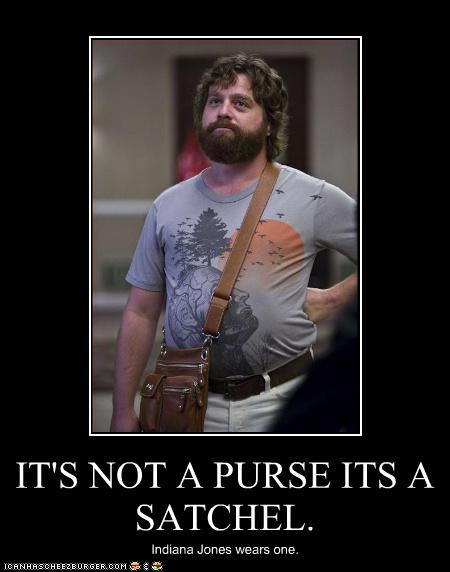
  • In the Guatemalan Coffee Bag Satchel: MacBook Air, ebook reader, iPod Touch, smartphone, magazine, headphones, passport, wallet, boarding passes.
Note: Yes, that's right, I said satchel.

The above method puts me on the ground in my destination with my valuables AND my rods and reels.

Not to mention fresh breath, too.

*          *          *

KNOW THY RIGHTS

Typically in air travel, you will come across some busy-body working for an airline or even the TSA or CATSA (that's the Canadian TSA) that...interprets...the rules a little differently than what is published (or makes sense in any civil society). They will say you are not permitted to take your fishing rod on the plane due to government safety regulations.

This is untrue.

Note: I had an very cranky airline agent tell me my rods weren't permitted on the plane as per government regulations. Now if this uppity bitch model employee had told me the airline did not permit fishing rods in the cabin, that's one thing. I would have complied, as the airlines make their own policy. But she had told an untruth, so I invited her to come to the security checkpoint with me. She declined, and so on I went...with the rods.

Here's what they say. I highly recommend you print the webpages these are from & stick 'em in your satchel...or other carry-on bag...

TSA (e.g., the occasionally mean dudes in the United States airports)
  • Fishing Rods / Poles: Fishing Rods are permitted as carry-on and checked baggage. However, please check with your air carrier to confirm that it fits within their size limitations for carry-on items. Ultimately, it is the carrier's decision as to whether or not it can be transported as carry-on baggage.
  • Tackle Equipment: Fishing equipment should be placed in your checked baggage. Some tackle equipment can be considered sharp and dangerous. Expensive reels or fragile tackle such as fly's (sic) should be packed in your carry-on baggage.
  • The website for this information is here.

CATSA (e.g., the barely-above minimum wage earning unarmed folks in Canadian airports that, in larger cities, can barely speak English and have never laid eyes upon a fly fishing rod & reel before)
  • This website wasn't really friendly to copying and pasting written regulations, but here it is in screenshot-form (you can view the website here):


*        *        *

MEXICO

Mexico is a crap-shoot, so it deserves extra attention. I will relate my experiences here so you can decide your own course of action.

When I flew into and out of Cancun, I had zero issues. Not even a glance at the rod case as a carry-on. I am guessing this is due to some relative amount of experience with anglers flying to and from Cancun and then moving to points further on the Yucatan Peninsula.

Flying through Mexico City just four weeks later was a clusterfuck of idiotic proportions.

I was permitted through Canadian security, as usual, and no issues through security and customs upon landing at MEX. But when I went to clear security for my connection to Guatemala City, the fun began. First there were questions, and general handling and fondling of the rods and reels. Then consultations with a supervisor began, with another supervisor coming in for moral support.

General stabbing and clubbing motions with my Redington Predator 6wt butt section soon commenced, followed by a lot of shrugging of the shoulders. Another supervisor showed up with a large binder, which drew the attention of four people. Pointing at the binder and me, and loud conversations over one another went on for about six minutes. I stood quietly with my hands folded while this went on.

With a series of head-nods, the binder was slapped shut and I was told I could go. With my rod case.

But while walking toward the gate, I was run down and scolded by a Mexican lady-hobbit in a supervisor's uniform. She brought back to the security checkpoint and told me to wait. Her scoldings then moved onto two other supervisors and the original officer that opened my rod case.

After a few minutes, an English-speaking supervisor shuffled over to me and sheepishly apologized. I had to check the rod case. I swore. A lot. Fortunately his English wasn't that good.

With four rods and reels, and all the other odds and ends I packed in the rod case, I was nervous about checking the bag. Especially in MEX. I paid the bag-wrapping dude $20US to do a really good job wrapping it. I handed over $3400 in fishing gear and accessories to the airline agent.

Fortunately it arrived in Guatemala City, and intact.

*          *          *

In conclusion, here are our lessons of the day:
  1. Always carry your rods and reels with you on the plane (beware of the sky check system, too).
  2. Be prepared to (very politely) argue your case. Print off the CATSA/TSA flight regulations from the links above and carry them with you to back up your story.
  3. Be prepared to possibly check your bags in foreign countries, especially those lands unfamiliar with fly fishing gear .
As always, questions, comments, suggestions, or any additional tips and tricks are always welcome in the comments section.

Happy trails.

- MT

10 July 2012

Traveling Angler Tuesdays Tip #3: Research

Traveling Angler Tuesdays launched June 26th, 2012 on mattrevors.com. My mission is to prove the concept of fly fishing travel abroad is not just the realm of old rich dudes and magazine writers & photographers. Keep checking back regularly as I share tips & tricks to get you to fly fishing locales you dream of going to. To see past articles & tips, click here.


So you, the Traveling Angler, have decided to travel for fish.

You have a passport. You have a zillion airline rewards points. And you have decided where you're going and what you're fishing for.

Now comes the fun part: planning and research.

The key thing to remember in the planning and research stage is this: Google is your friend.

The two most important questions to ask in planning your fly fishing trip are when and how.

1. When?

This is probably the simplest yet most important part of the research: when is the best possible time to go?

It is important because you don't want to spending January chasing either Atlantic salmon in the Gaspé Peninsula or migratory tarpon in the Keys.

A few keystrokes in Google or a quick email or phone call to a guide or local fly shop should tell you when to plan your trip.

2. How?

There are a few choices on how you're going to take your trip and spend your money. For most people, it comes down to cost and expectations.

The Traveling Angler has the following to choose from for accommodations and fishing:
  • Lodge or camp-based, with meals and guides included.
  • Guided, but finding own accommodations and meals.
  • Do it yourself (DIY).
  • Combination of guided & DIY.
A big part of deciding is logistics; in some locations, DIY is not practical nor cost-effective (or possibly legal). Other locations, or if traveling in a larger group, a lodge-based trip might not be possible. DIY or a combination of hiring a guide and DIY might be the cheapest and most sensible route, especially if one of the group has experience in the area you're traveling and fishing.

There are pros & cons to each but, as mentioned above, it comes down to cost and expectations:
a) How much money am I willing to part with? 
b) What is the likelihood of having a successful fishing trip?

Asking yourself (and your traveling companions, if applicable) when you're going and how you'll be fishing will set the foundation for the trip.

*          *          *

Now you're ready to start researching the finer points of your upcoming trip.

The finer points, of course, are the small details that will make or break your trip. This section will help you make your final preparations. Here are a list of things to consider:
  • Weather: knowing the weather conditions will determine what you pack for clothing. Too little or light, and you're uncomfortable. Too much and it's a pain to carry it around (note: I will be posting about packing in an upcoming Traveling Angler Tuesday tip).
  • Gear: Are you bringing your own gear, or using gear provided by a guide? Do you have the right rod and reel setup? Your Montana trout rig will not suffice for permit fishing.
  • Terminal tackle: Do you have the proper leader, tippet and flies for the species you'll be fishing? Do you have enough to last through your trip? Know that most countries outside of the US and Canada DO NOT have fly shops to top up supplies, so it is imperative you bring what you need with you.
  • Technique: Are you sight-casting? Do you need to make 75' casts with 16-foot leaders in a twenty knot headwind? Are you wading? 
  • Physical considerations: Are you in decent enough shape to wade all day in tropical heat? Do you have food allergies? Do you need travel vaccines? Do you need to bring sunscreen and fly repellant? Are you covered under travel insurance (note: I will be posting about travel insurance in an upcoming Traveling Angler Tuesday tip)?
  • Currency: Do you need to buy the local currency? Is it cheaper or more legit to do so in the host country or at home in your local bank? And, of course, how much (note: I will be posting about budgeting your trip in an upcoming Traveling Angler Tuesday tip)?
  • Accommodations: Are you staying at a lodge? Hotel? Hostel? Campground? House or condo rental? How much will it cost? Who will book it and pay the deposit, if necessary? How far is it from your fishing location?
  • Food and drink: Is your trip all inclusive? Are you eating locally? How much should you expect to pay per meal? How much does a beer cost? Are there local grocery stores? Refrigerators or coolers and ice? Is the water safe to drink without treating? 
  • Transportation: What happens once you land at your destination? Is someone picking you up? Do you need a rental vehicle? Does the rental company have any limitations (e.g., in Alaska, I couldn't take my rental down unpaved highways)? Do you need a shuttle service or a taxi? Is there anything you should avoid (such as any and all green cabs in Ouagadougou)? Does the lodge provide a pickup or transfer service?
These are all things that should be considered before you step out your door with your rod case over your shoulder. Preferably a few weeks before that.

If you are heading to a lodge or on a guided trip, the majority of the questions above can be answered via an email or phone call to the lodge or guide.

Pro tip: If the questions cannot or do not get answered by the lodge or guide, run the f**k away! Do not give your hard-earned cash and time to some donkey-run backwater outfit that can't tell you what leaders to bring. Book your trip with reputable lodges and guides, always!

Most of those questions can be answered with a quick Google search. More detailed information, such as fishing tackle and technique for a DIY trip, can be found with Google, too, but expect to spend a bit more time browsing web forums and blogs for this information. 

Hitting up Twitter, Facebook and Google+ and asking the right people if they or anyone they know have information might give you some leads as well. New to the social media thing? Sign up for Twitter and follow me. Then follow the fishing people I follow and politely ask us some questions. Twitter folks have all the answers.

Pro tip: Don't sign up for web forums and immediately start a new topic asking for directions to a good fishing spot. Longtime users of forums really, really dislike this.  Spend some time searching and reading through previous threads. There's usually a gold mine of info on time of day, fly patterns, techniques. If you still have questions, steer away from specific locations. Maybe ask for a recommendation for a guide or fly shop. This might be just a Northeast US and eastern Canadian thing; I'm not sure. But we don't like spot-burning on the interweb for our honey holes for stripers, salmon, trout and bass, I can tell you that.

If you have any travel companions, split the load up and assign a few research topics to each person. Google Docs or a DropBox folder is a great way to keep track of your findings.

Pro tip: cloud computing, such as Google Docs and DropBox, is the Traveling Angler's friend. More on that someday in the future.

The list of questions and tips above is by no means comprehensive, but it is damn-well close. 

*          *          *

My Research at Work

I travel a fair bit for work. As such, I'm a big fan of the side trip. 

My reasoning is if I'm getting flown to some random place for three or four weeks at a time, it is my duty and responsibility as an angler (and writer) to fish there. I might never be back there again.

Of course, fishing may very well be limited by geography, season, weather, travel itineraries and, obviously, work (imagine, huh?). So research is a very big part of these side trips. 

It might mean bringing three rods and a slew of flies, such as this recent trip to Alaska with my 5wt, 7wt & 10wt in tow. Or it might mean bringing my tying material and leaving the rods at home (e.g., Nunavut in April).

Here are a few examples of how a little bit of research beforehand (and occasionally during) has resulted in making some work trips into fishing trips.

Last year I worked in Northern British Columbia for a few weeks. While there, I scoured the internet to research the best possible bang for my buck to fish once my project was completed. From what I was reading, I felt DIY wasn't going to be practical: the river system there is huge and the runoff was in full, making wading impossible...and there are big-ass grizzly bears around. 

I ended up booking a day with Derek Botchford of Frontier Farwest on the Bulkley River on my way back home. The logistics involved delaying my departure flight by two days and booking a cheap motel room. That's it. It took three emails and two phone calls to make this day trip happen.

Unfortunately the timing wasn't right for the Bulkley's famous steelhead season, but I managed to hook a chinook and a bull trout, and spend a day having great conversation with a really interesting dude while running up & down the river in a jet boat. It was totally worth it. And it wasn't that expensive.

Note: But I didn't see any grizzly bears, damn it!

On the other hand, when I found myself in Yellow Pine, Idaho for the month of October for work, it was all DIY. Within 30 minutes of my plane landing in Boise, I was pulling into Idaho Angler in my rental truck. I bought a license and started peppering the helpful staff with questions about where I was heading and what I could expect for fishing. They helped pick out a selection of flies for me and I was off. Bull trout were the order of the day (and month) and they were pretty fun.

When I returned to Boise, I popped into the shop again. They remembered my face & asked me how it was. Since I wasn't flying out until the next day, they directed me to the Boise River for rainbows and what fly to use. I had a blast.

Pro tip: Pay a visit to a local fly shop. Be friendly. Buy some flies or leader or a magazine. They should give you some little nugget of information to make fishing their area a little easier.

Here's an example of failing to research...and then researching like a man obsessed:

In Northern Saskatchewan last August, I didn't bring any fly rods with me. I only had roughly forty minutes between my flight into Saskatoon and my flight north to the project area. No possible way to buy a license in forty minutes, and online licenses weren't available there.

Once I arrived at the project site, I quickly discovered the majority of the guys were fishing obsessed. And it turned out I could buy a license, at the commissary of the aerodrome I flew into. So there I was, in big pike country with no fly rod. But the guys gave me a loaner spinning rod. And then I hit the internet.

I was up until 2AM reading everything I could find online on techniques for fishing pike. The next night I went fishing with the crew and caught one on my first cast. And then caught some more. Two nights later, I caught the largest pike anyone had ever caught on that project site. 

I'll be the first to admit it was luck of right time, right place. But the research I did online told me the structure to look for, the depths to fish at and the retrieve to use. So how much of that is luck?

Unfortunately the pike wasn't on a fly rod, so it sits on my Species Journal with an asterisk...for now...

After catching the big pike, I didn't get invited to go fishing any more. So I turned my attention to the elusive Atlantic salmon back home. Each night, after my work was done, I would read articles and forum posts about Atlantic salmon fishing, and scroll over the Miramichi River in Google Earth. Of course, I caught two on my first afternoon fishing once I returned home. Research works.

Note: Frequent readers will know my ego has since been deflated back to normal, sit-in-the-corner-mumbling levels with regard to Atlantic salmon.

*          *          *

With a bit of time and effort, and some help from Google, research can and will help you, the Traveling Angler, make the most of your trip.

Questions, comments, suggestions, or any additional tips and tricks are always welcome in the comments section.

Happy trails.

Mat
Enter your email address to subscribe (I will never, ever spam, sell or trade your email address):